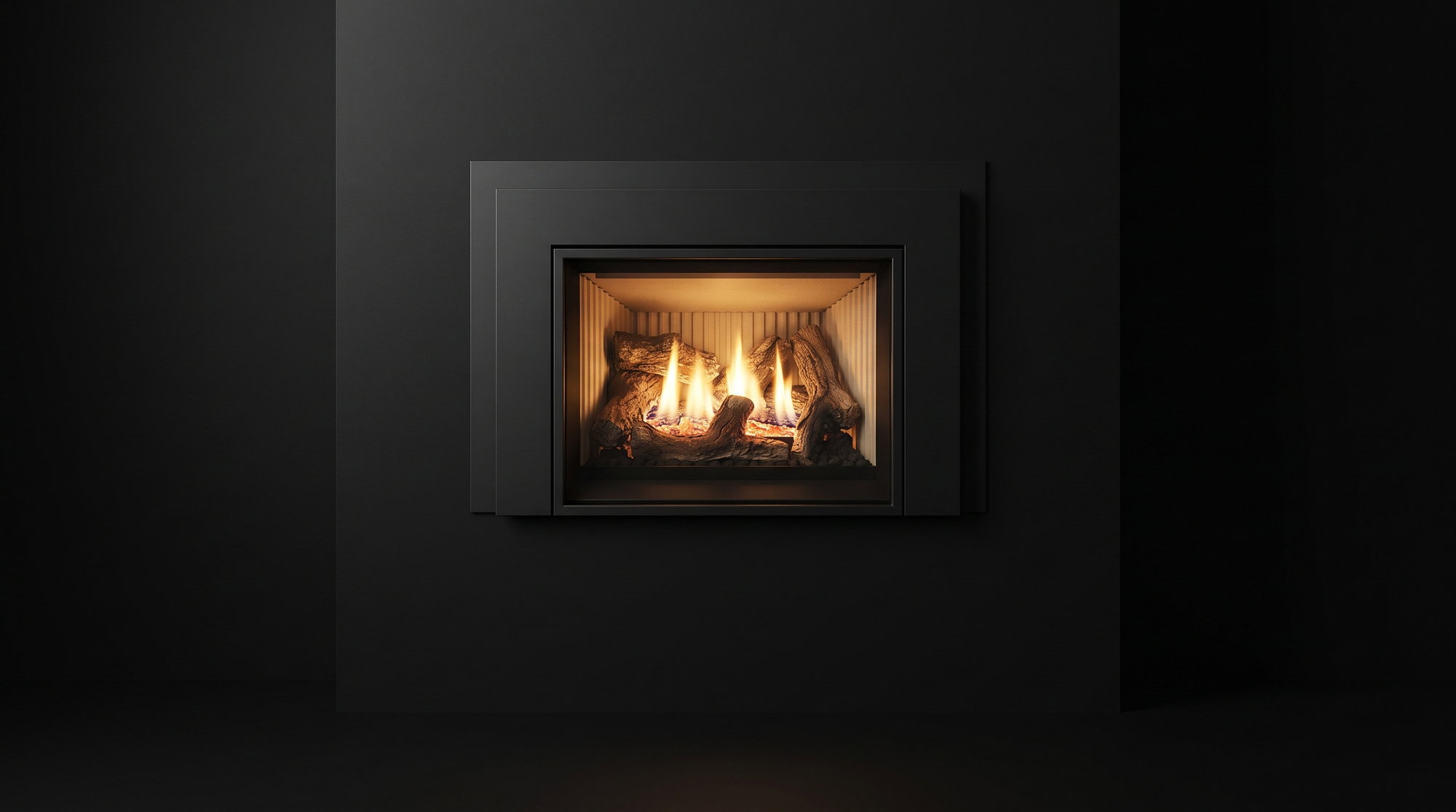
Small opening. Real fire.
Gas insert · 5.0 on Google · TSSA-registered installs
Enviro · Gas Inserts
The maker’s words — a “cast iron heat exchanger” behind a “clean face look.”
The smallest opening in the row — 24¼″ × 18¼″ — with a “classic log set” glowing against the pale fluted liner.
The only insert in the row with a “cast iron heat exchanger” — the old-school way to hold heat and give it back slowly.
“Up to 50% turn down valve” with an “easy-access burner switch” — shoulder-season evenings without opening a window.
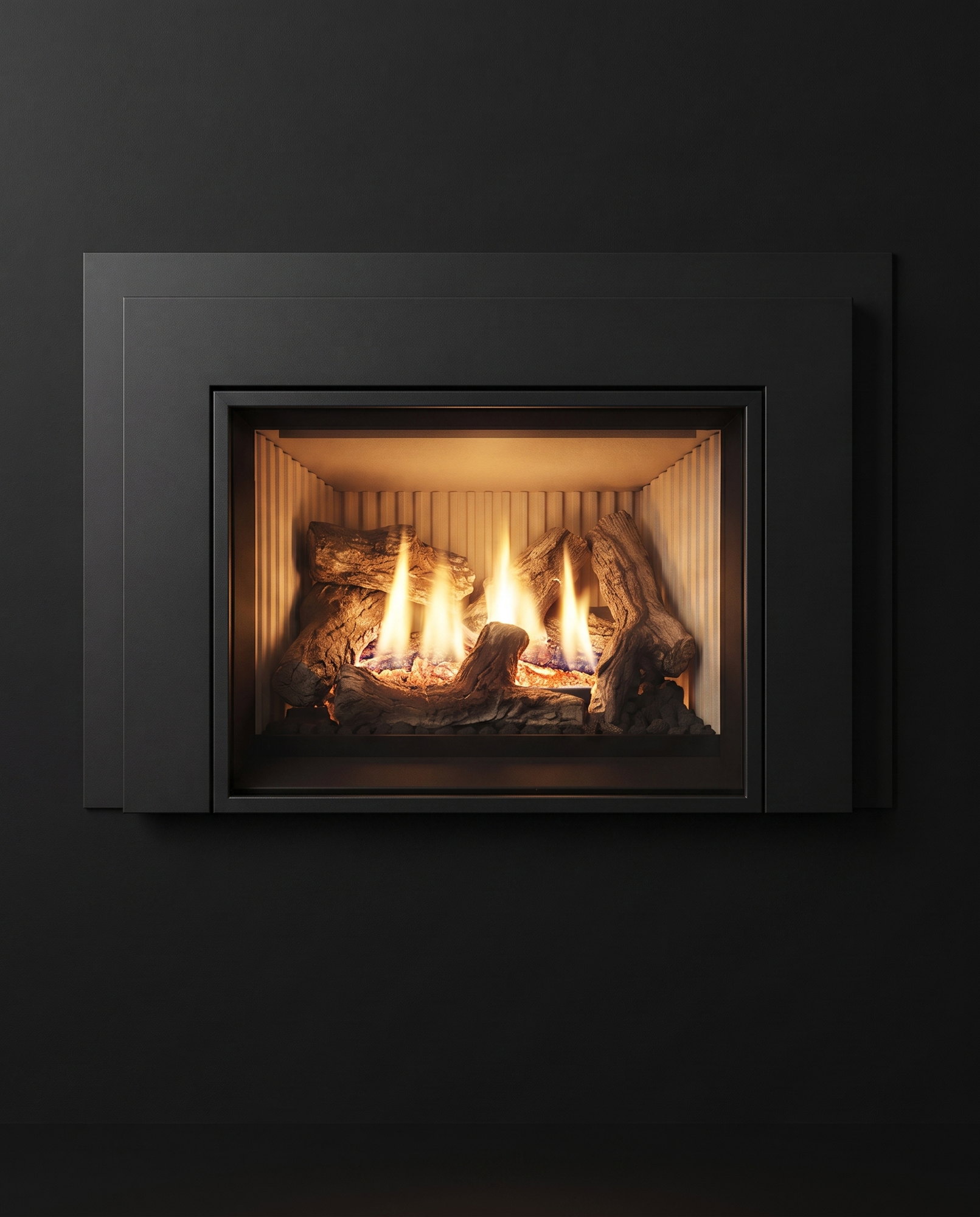
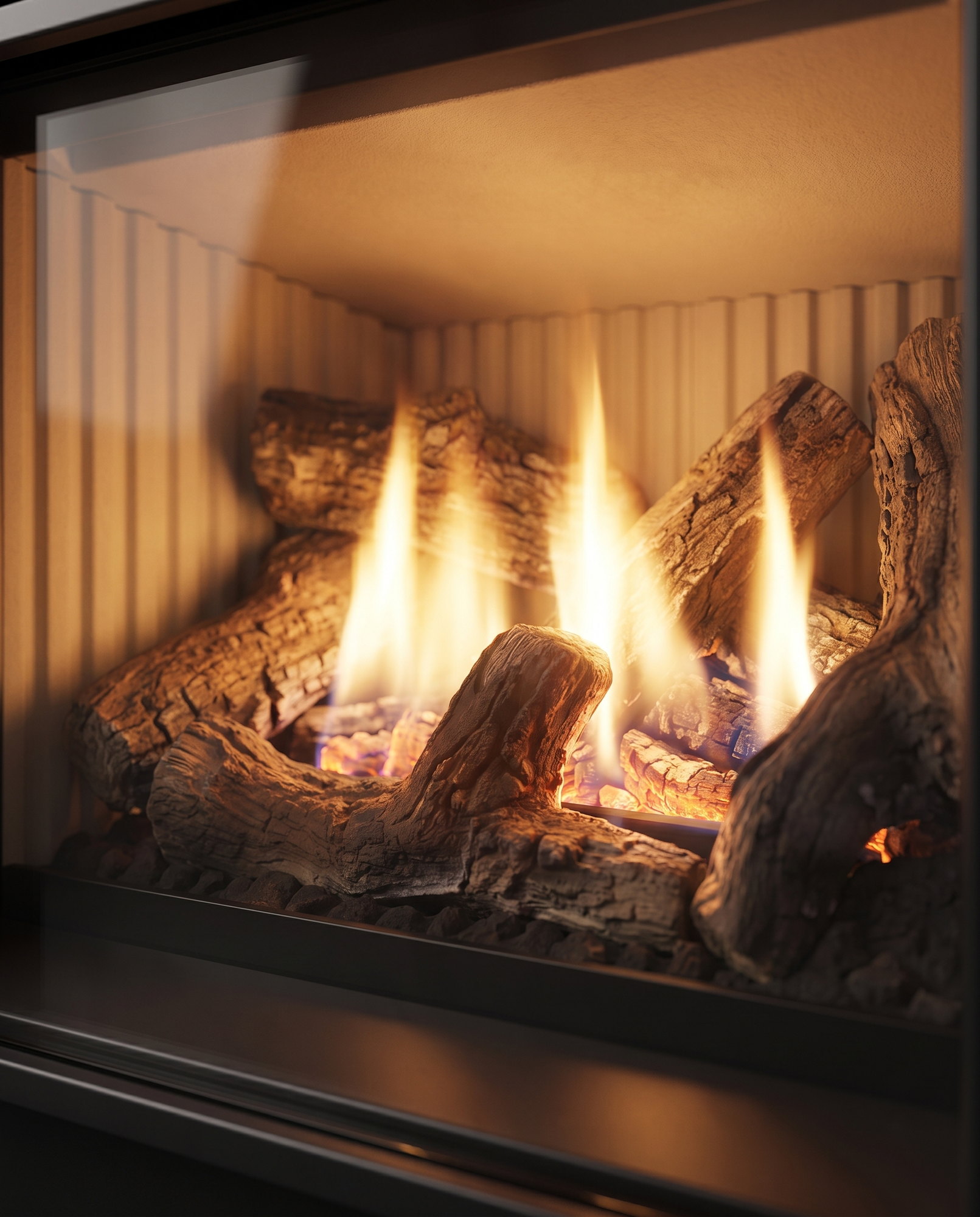
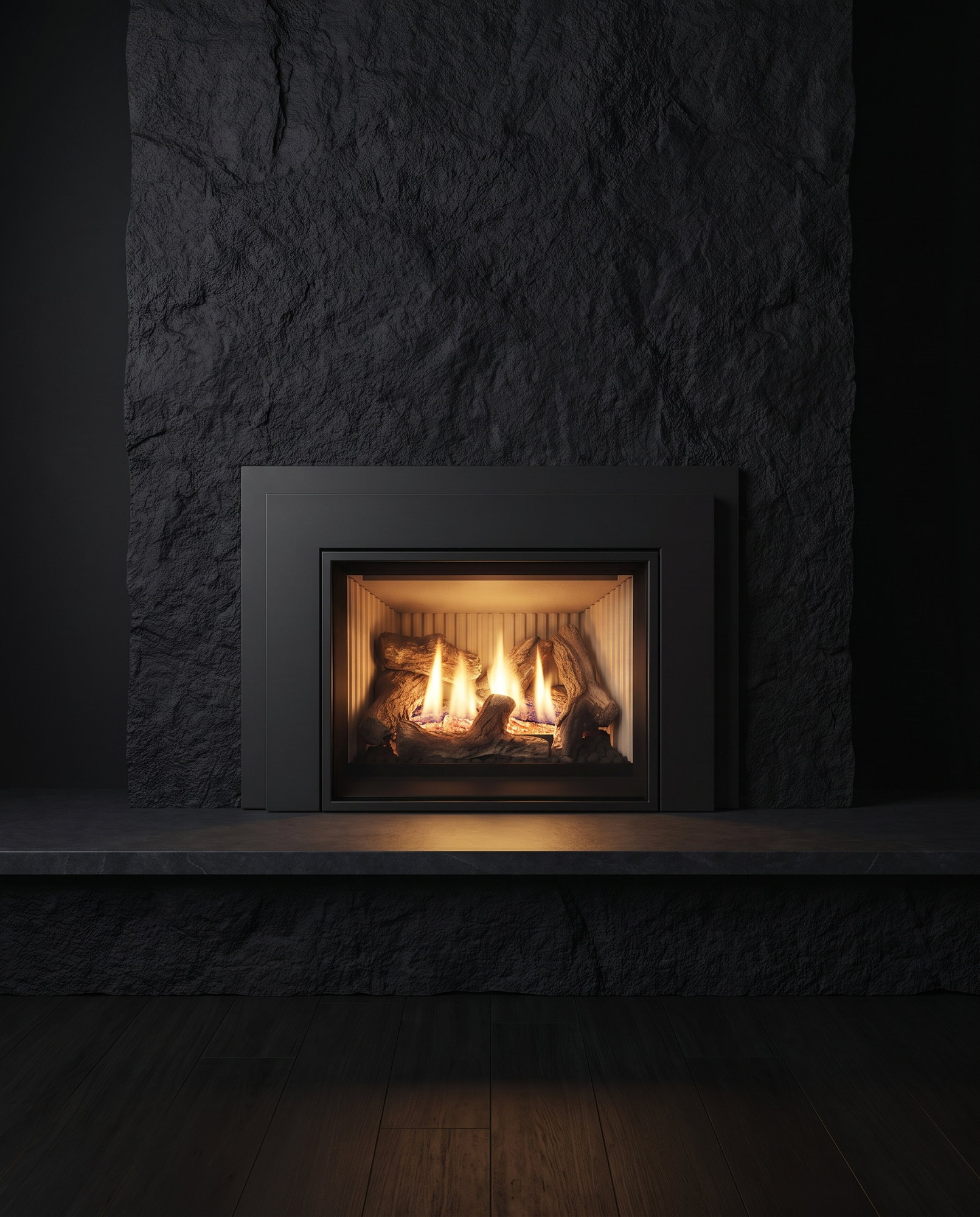
Photography: Enviro
From our Enviro files — in place, and the fire up close. Tap to step inside.
Will it fit?
The maker’s numbers
These are the numbers we install to — every number above is Enviro’s own published figure, nothing rounded by us, nothing guessed. Ask us for the maker’s brochure and the owner’s manual — on hand at the showroom. Or ask us anything at the showroom.
The Enviro Gas Inserts
The portrait one. A window higher than it is wide.
20,000 BTUThe small one. Cast-iron heart, fluted glow.
You’re hereThe shallow one. Liner not required.
28,000 BTU Fire-under-log · 1,700 ft²The new one. Flames rise through the logs.
32,000 BTU Medium insert · 1,700 ft²The medium flagship. BluIQ, 74.97% efficient.
32,500 BTU Medium insert · 1,700 ft²The medium workhorse. Fifteen faces.
33,000 BTU Large insert · 1,800 ft²The large one. Glass or log burners.
34,000 BTU Large insert · 1,900 ft²The large flagship. BluIQ, ember light.
35,000 BTU Extra large · 2,300 ft²The biggest window in the row.
42,000 BTUReal voices · 5.0 on Google
“…the knowledge and guidance we received in determining size, location and finishing design was invaluable.”
Phil M. · Google review
“As someone extremely particular and fussy I was very pleased.”
Josh R. · Google review
Quick answers
The E20 needs just 24¼″ × 18¼″ of opening and about 14&frac516;″ of depth — the smallest ask in the row. Five surrounds plus a big Trimmable Filler Panel (41¾″ × 28¾″) cover whatever brick is left around it.
No new chimney — your existing one does the work. We run two continuous liners down it (a co-linear direct-vent pair, 3″ each on the exhaust side, 2″ intake for the E20): one brings combustion air in, the other takes exhaust out, and the firebox stays sealed from your room. We sweep and inspect the chimney first, and every gas connection is made by TSSA-registered technicians.
Cast iron holds heat and releases it slowly — the fire warms the iron, the iron keeps warming the room. It’s the same reason old radiators were cast: steadier heat from the same flame.
What it costs
Every wall is different — framing, venting, gas line — so your price is real, not a guess.
Two minutes online. Photos help; the booking machine takes them.
Dan prices your exact install and walks you through every line of it.
Nick’s crew frames it to the maker’s spec, runs the venting, and leaves the room clean.
Or come see it in our Coldwater showroom — the espresso will be on.
Beyond the insert row
Twelve built-in gas fires live on the walk today — linears, clean-face squares and traditionals from the same maker.
See the fireplaces → The freestanding houseSix freestanding gas stoves — cast iron and steel, from the little S20 to the Westport.
Meet the stoves → Prefer to burn wood?Eight wood fires from Belgium — stoves, inserts and the guillotine fireplaces, WETT-certified installs.
Walk the Stûv house →